

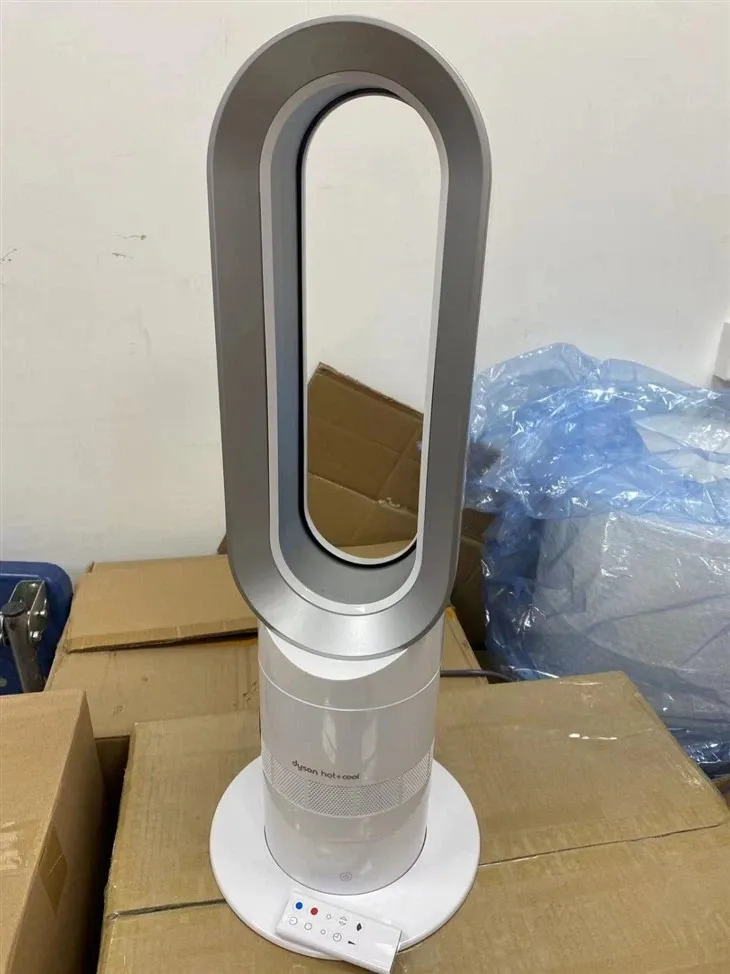
Bladeless Dyson Air Purifier
A bladeless tower fan operates in much the same way as a bladeless fan. The blades are hidden inside a tall tower. However, since it doesn’t feature the same aerodynamic design, it doesn’t multiply the air as much as a circle or oval model. On the plus side, tower fans are typically more affordable.
Description
Shenzhen Xunbanglong Technology Co. LTD., headquartered in shenzhen, factory located in dongguan city, founded in 2013 engaged in mobile accessories and consumer electronics industry for ten years, the factory covers an area of about 3000 square meters, the daily output of up to thirty thousand units daily headphones, capacity is enough, to provide strong guarantee.
Why Choose Us
High quality
Our products are manufactured or executed to very high standards, using the finest materials and manufacturing processes.
Competitive Price
We offering a higher-quality product or service at an equivalent price. As a result we have a growing and loyal customer base.
Global shipping
Our products support global shipping and the logistics system is complete, so our customers are all over the world.
After-sale service
Professional and thoughtful after -sales team, let you worry about us after -sales Intimate service, strong after -sales team support.
Rich experience
Our company has many years of production work experience. The concept of customer-oriented and win-win cooperation makes the company more mature and stronger.
Advanced equipment
A machine, tool or instrument designed with advanced technology and functionality to perform highly specific tasks with greater precision, efficiency and reliability.

Wireless Dyson Corrale Straightener
The Dyson Corrale is a cordless hair straightener that is designed to provide superior styling performance with minimal heat damage. It features flexible copper plates that adapt to your hair for smoother, straighter results with less frizz.

Dyson Supersonic is an innovative hair dryer that uses advanced technology to dry hair quickly and without damaging it.
Its powerful motor allows it to dry hair four times faster than other hair dryers, while its intelligent heat control technology helps prevent extreme heat damage and protects hair's natural shine.

The Dyson Airwrap is a hair styling tool designed to create a variety of styles using air and heat. It features a motor that creates a high-velocity jet of air to wrap hair around barrels without using extreme heat, thereby minimizing hair damage.

Dyson V11s is a cordless stick vacuum cleaner with powerful suction and advanced features.
It is the latest model in the Dyson V series, known for its cordless and lightweight design.

Ring amplifier: 153 mm
Temperature range: 1 ℃-37 ℃
Wire length: 2.7 meters
Airflow rate: up to 500 L/s
A bladeless tower fan operates in much the same way as a bladeless fan. The blades are hidden inside a tall tower. However, since it doesn't feature the same aerodynamic design, it doesn't multiply the air as much as a circle or oval model. On the plus side, tower fans are typically more affordable. They are a great option for someone who wants a steady airflow but doesn't have the budget for a high-end model, such as a Dyson.
Benefits of Bladeless Dyson Air Purifier
They're quieter
High-quality bladeless ceiling fans should only make a low, smooth, and, most importantly, consistent sound when turned on. Compared to the clack-clack-clack of a traditional ceiling fan that needs a good cleaning, bladeless ceiling fans can seem much less disruptive, especially in a bedroom.
You can lower your hvac energy use
The Department of Energy encourages the use of ceiling fans overall, but bladeless fans take electricity savings a step further. Let's look at the unique bladeless technology we mentioned above. Instead of pushing around the hot air in the top of a room-such as with a traditional fan-a bladeless design pulls in air and recirculates it faster than it came in. The cooled air spreads throughout the room faster, more evenly, and without using as much wattage.
Wide range of styles
Since most of the magic happens inside the bladeless fan, designers can streamline the outside of the structure. For example, you can choose from minimalistic bladeless fans with basic black wrought iron or metal frames, or even opt for a model with built-in lighting.
Perhaps most notably, bladeless fans are far more inconspicuous than traditional ceiling fans. You won't have to worry about the design of the extended blades going out of style or wearing down over time. In fact, unless you feel the slight breeze coming down from the fixture, you may not even realize it's a fan at all.
Safer for low ceilings
Bladeless fans offer the same cool breeze without the space typically needed for the extended arms of the fan. This perk also applies to other rooms with low ceilings, such as basement home offices or attic rooms.
Types of Bladeless Dyson Air Purifier
Dyson TP01 pure cool air purifier
The Dyson TP01 is the base, flagship Dyson bladeless fan. It has a built-in air purifier, and can cool any large room. Dyson pioneered and originated the bladeless fan technology, so the company's own bladeless fans are top-of-the-line.
Dyson pure hot + cold (HP04) space heater
If you're looking for a step up in the Dyson line, the Pure Hot + Cold is just the ticket. It includes a space heating function along with the built-in air purifier, and is WiFi enabled so you can pair it with the Dyson app to monitor your space's air quality and remotely control the machine.
Dreo cruiser pro
The Dreo Bladeless Fan is the optimal compromise between price and functionality. True, it's not the brand-name workhorse the Dyson fans are, but for $80 you get 6 customizable speeds at a quiet 34 decibels, with 90 degrees of oscillation and a 12-hour timer.
Components of Bladeless Dyson Air Purifier
Air multiplier technology: At the heart of the Dyson bladeless air purifier is the Air Multiplier technology, which consists of an annular aperture and two rings of silent louvres. This setup accelerates air through the aperture, drawing in surrounding air and amplifying it up to 30 times before projecting it out into the room.
HEPA filter: The HEPA (High-Efficiency Particulate Air) filter is responsible for capturing microscopic particles such as dust, pollen, mold spores, bacteria, and pet dander. The filter is made from a fine mesh of glass fibers, which trap particles as small as 0.1 microns in diameter.
Activated carbon layer: Often accompanying the HEPA filter is a layer of activated carbon, which is effective at neutralizing odors, gases, and volatile organic compounds. The activated carbon has a large surface area with numerous pores, allowing it to adsorb a wide range of pollutants.
Sensors: Most Dyson bladeless air purifiers are equipped with automatic sensor systems that continuously monitor the air quality. These sensors detect particulate matter, VOCs, and sometimes humidity and temperature levels, allowing the device to adjust its operation to maintain optimal air quality.
LCD screen: An LCD screen displays information about the air quality, filter life, and operational status. Some models also feature touch-sensitive controls on the screen for easy adjustment of settings.
Remote control: A remote control is included with most models, allowing users to adjust the airflow speed, oscillation, and other settings from a distance. Some remotes also have magnetic properties, enabling them to attach to the top of the air purifier for storage.
Power cord: The power cord provides the electrical connection to the mains supply, powering the device.
Base unit: The base unit houses the motor, electronics, and other internal components. It supports the upper section where the air multiplier technology is located.
1.Always turn the air purifier and bladeless fan off before removing the plug from the outlet.never plug in or unplug with wet hands.
2.Always turn the air purifier and bladeless fan off and unplug it immediately after using and before cleaning.
3.To protect against electrical hazards, do not place the air purifier and bladeless fan in water or other liquids. Do not allow the fan to become wet or damp. Do not store the fan where it can fall into water or other liquids.
4.Do not attempt to repair or replace any part of your air purifier and bladeless fan unless it is specified in this manual. All other services should be referred to a qualified technician.
5.Use only a 220V AC outlet. Always plug and unplug unit with dry hands to avoid electric shock.
6.Do not remove the round grounding prong from the plug.
7.Do not plug other appliances into the same outlet; it can overload the circuit and cause a fire or electric shock.
8.Be sure to remove all packing materials from the air purifier and bladeless fan before use.
9.Do not store the air purifier and bladeless fan unattended when it is plugged in. Turn the fan off when leaving it for an extended period of time.
10.Use the air purifier and bladeless fan only for itsintended use as described in these operating instructions.
11.Do not operate any appliance if its cord or plug is damaged, after the appliance has malfunctioned, or after it has been dropped or damaged in any way. Always follow the warranty instructions.
12.Ensure the power cord is plugged firmly and completely into the outlet.
13.Do not start or stop operation by plugging in or unplugging the power cord, always use the device controls.
14.Place air purifier and bladeless fan on a flat, level surface to avoid it overturning.
15.Never drop or insert any object into any opening. Do not insert any objects into the fan as it may cause electric shock or damage.
16.Close supervision is necessary when any appliance is operated near children. Do not let your child play with this appliance. Serious injury and electrocution may be possible. This appliance must be operated by an adult. Children should be supervised to ensure that they do not play with this fan or the packaging.
17.Do not use this or any appliance near flammable gasoline, benzene, thinner, etc.
How Are They Different from Standard Fans?
Traditional fans provide weaker air flow.
A traditional fan merely pushes air with its blades. Though many of the same principles are in play-air still pulls more air along as it passes through the blades-bladeless fans optimize this process with their clever design, which takes full advantage of physics.
Bladeless fans are safer than traditional fans.
Because the "blades" of a bladeless fan are tucked away in its base, they pose less danger, especially to curious infants and pets. While most traditional fans are surrounded by a cage, the cage may break or fail to prevent children from sticking their fingers into the fan itself.
Bladeless fans are quieter than traditional fans.
The original Dyson bladeless fans had something of a noise problem, but later redesigns smoothed out the harsh noise. Bladeless fans are now typically much quieter than their bladed counterparts, which makes for a cooler, more peaceful space.
Bladeless fans use less energy.
Heating and cooling typically comprise the largest percentage of your energy bills, so you want to lower that however possible. Bladeless fans are capable of circulating air much faster than traditional fans, which cools any given space much faster, which lowers the amount of power needed to stay cool yourself.
Traditional fans are typically cheaper.
While bladeless fans may offer better airflow and safety, they also are significantly more expensive, due to their highly engineered design. In addition, many bladeless fans now come with additional features, like remote controls and air purifying or even heating capabilities, which will cost you more.
How Do Dyson Bladeless Fans Work?
A propeller in the base of the fan draws air into the pedestal.
That's right, bladeless fans aren't actually bladeless. It's a tad misleading, since there is actually a propeller with blades concealed in the base of the fan, which takes in air through the vents in the fan's pedestal. These fans are "bladeless" because you don't see the blades, not because they don't have them!
The propeller pushes air out through the fan's ring.
Once inside the base of the fan, air is directed up into the ring of the fan. Then, the air is expelled out through a slot in the fan's ring. This slot spans the entire length of the ring, creating a circle of flowing air.
The expelled air creates "negative pressure," which sucks in more air.
The inside of the fan's ring is shaped like a slight cone, and the expelled air exits the wider end of the cone. This movement creates what's known as "negative pressure" around the ring of the fan. The air around the fan wants to fill this area of negative pressure, and so more surrounding air is directed or sucked through the fan, creating a more intense breeze.
"Negative pressure" occurs because the air inside the ring is moved out of the ring, and so more air is pulled into the ring in order to equalize the pressure.
This phenomenon of air getting sucked into the ring of the fan due to negative pressure is known as "inducement."
Air around the fan also begins to move in the direction of the breeze.
As the air is expelled through the fan's ring, it pulls additional air outside the ring along with it. This process is called "entrainment," and adds to the overall airflow created by the fan. Note that the air is "multiplied" now in 2 different ways: air pulled in through the ring, and air pulled along from outside the ring as the air inside the ring exits. By the time the air exits the fan, its flow is about 15 times more intense than when it started, all thanks to some clever physics!
The physics that make bladeless fans possible, namely air inducement and entrainment, are the same physics that lift an airplane as air flows over its wings.
Calling a Dyson Air Multiplier a fan without blades is perhaps a touch misleading. They do have blades; you just can't see them because they're hidden inside the pedestals. A motor rotates nine asymmetrically aligned blades to pull air into the device. According to Dyson, the newest iterations can project more than 77 gallons of air per second for cooling airflow.
The air flow is diverted through the back of the machine. But how does the fan multiply the amount of air coming into the pedestal of the device?
It boils down to physics. While it's true that the atmosphere is gaseous, gases obey the physical laws of fluid dynamics. As air flows through the slits in the circular tube and out through the front of the fan, air behind the fan is drawn through the tube as well. This is called inducement. The flowing air pushed by the motor induces the air behind the fan to follow.
Air surrounding the edges of the fan will also begin to flow in the direction of the breeze. This process is called entrainment. Through inducement and entrainment, Dyson claims its fans increase the output of airflow by 15 times the amount it takes in through the pedestal's motor.
Yet there's one problem that Dyson didn't quite overcome with its unique fan. Next you'll see why Dyson changed the design of its Air Multiplier when it came time to make a second version.
Our Factory
Our company adheres to the demand of "based on the market, paying attention to customers" and the principle of "honesty first, quality first, and customer first". A thousand mile trip begins with one step. We firmly believe that only by putting people first, actively developing, continuously improving product quality, and constantly innovating products, is the fundamental development of the company. Our company is customer-oriented, focuses on the market, offers competitive prices, and truly achieves the goal of "flying heart for thousands of miles, serving the public"


Our Certificate





FAQ
Q: How do you maintain a bladeless fan?
Run a clean cloth under water and squeeze out the moisture so it's damp. Just wipe the inner ring of the fan in long, swift motions. Then, use a clean, dry cloth to dry off the moisture. Dyson fans do not have blades, which makes the cleaning process a lot easier.
Q: Do Bladeless fans get dusty?
Q: Are bladeless fans easy to clean?
Q: How do I clean my Dyson air purifier?
Q: Why does my Dyson fan smell bad?
Q: How do I clean the filter on my Dyson air purifier?
Q: How long does a Dyson hot and cool purifier filter last?
Q: Do bladeless fans use more electricity?
Q: Are bladeless fans better than tower fans?
Q: Do bladeless fans cool a room?
Q: Is bladeless fan noisy?
Q: How long should I leave my Dyson air purifier on?
Q: How do I stop my Dyson filter from smelling?
(don't use detergent or wash in a dishwasher or washing machine). Rinsing under the water supply then gently squeezing the water out of the filter. Repeat until the water runs clear.
Q: How do I stop my Dyson from smelling?
Q: How do I start my Dyson deep clean cycle?
Q: Do Dyson air purifiers last?
Q: Does Dyson air purifier remove mold spores?
Q: Which Dyson air purifier is best?
We found the Dyson Purifier Cool TP07 Smart Air Purifier and Fan to be the best Dyson air purifier during our lab tests. It removes dust and allergens from the air, filters out pet hair, and also works to cool down a room.
Q: Do bladeless fans collect dust?
Q: Why are bladeless fans quieter?
Hot Tags: bladeless dyson air purifier, China bladeless dyson air purifier manufacturers, suppliers, factory, Dyson Imitation, dyson v8, Dyson hair straightener, dyson supersonic hd07, dyson airwrap multi styler, Dyson Corrale Straightener
Send Inquiry
You Might Also Like


